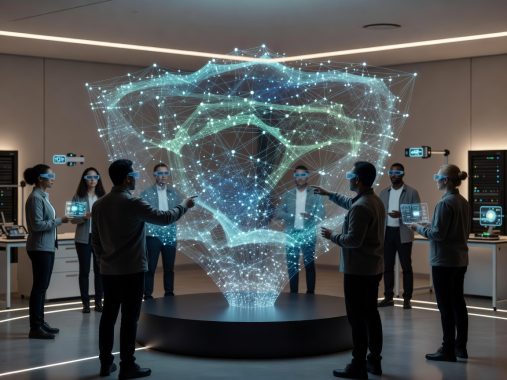
As we progress through 2026, the boundaries between linear digital media and interactive spatial environments have effectively dissolved. The catalyst for this transformation is the integration of generative foundation models directly into spatial computing engines.
Beyond Rigid Scripting
Historically, virtual reality experiences required developers to pre-render every geometry mesh, animate every character movement, and hard-code dialogue branches. This restricted replayability and constrained emotional involvement.
With real-time neural mesh synthesis and spatial context models, virtual worlds now adapt dynamically to user intent, physiological state, and verbal input in milliseconds.
The Paradigm Shift in Enterprise Simulation
From surgical practice to high-stakes emergency response training, adaptive AI environments provide scenario variations that test true human adaptability rather than memorized script execution.
"The future of VR is not static world building, but continuous co-authoring between human intent and synthetic intelligence engines."